

The Effects of Racism and Trauma on Black and Brown Students’ Mental Health

Picture of By: Dr. Ricardo Anderson
By: Dr. Ricardo Anderson
November 19, 2021

The Effects of Racism and Trauma on Black and Brown Students’ Mental Health

This blog is an outlet for individuals to discuss and to provide possible solutions for mental health issues in our community. The topic of Black and Brown students’ race- based traumatic events continues to erode the consciousness and mental health of our students. As a former school administrator in a school district of predominately Black and Brown students and mostly white educators. I found it challenging to bridge the gap among the staff and our students to address the effects and impact of trauma, racial issues, and to bring understanding and cohesiveness within our school. 

What Are Trauma and Child Traumatic Stress?

Traumatic events involve (1) experiencing a serious injury to oneself or witnessing a serious injury to or the death of someone else; (2) facing imminent threats of serious injury or death to oneself or others; or (3) experiencing a violation of personal physical integrity. Child traumatic stress occurs when children’s exposure to traumatic events overwhelms their ability to cope with what they have experienced. Traumatic events can have a wide-ranging impact on children’s functioning and can cause increased anxiety, depression, symptoms of posttraumatic stress disorder, difficulty managing relationships, and, most important for educators, difficulty with school and learning.

What is Historical Trauma and Race-Related Trauma?

Historical trauma is a form of trauma that impacts entire communities. It refers to cumulative emotional and psychological wounding, as a result of group traumatic experiences, transmitted across generations within a community (SAMHSA, 2016; Yehuda et al., 2016). This type of trauma is often associated with racial and ethnic population groups in the US who have suffered major intergenerational losses and assaults on their culture and well-being. The legacies from enslavement of African Americans, displacement and murder of American Indians, and Jews who endured the Holocaust have been transferred to current descendants of these groups and others.

Race-related trauma is defined as exposure to traumatic events due to an individual’s race (Bryant-Davis & Ocampo, 2005). Specifically, race-related trauma is a byproduct of racism when racism disrupts the psychological, emotional and physical well-being of children, adolescents, and adults.

Some of the Causes of Racial Trauma

The longstanding systemic history of racism within this country also contributes to this cumulative traumatic effect. The various types of stressors that people of color experience can be categorized as:

Intergenerational stressors:
The traumatic effects of racism, whether it be specific events or systemic structures, are often passed down through generations. This is the result of the United States’ history of colonialism and slavery. The experiences and stories that are shared often pass along the emotional pain associated with them either consciously or unconsciously. An example of this is how many Black and Brown parents have conversations with their children where they explain how to interact with police as a person of color. 

Vicarious stressors:
This includes the impacts of living in a systemically racist society and indirectly experiencing acts of racism. Even when individuals are not directly impacted by events, they can experience the same psychological and physiological effects on the nervous system. For example, one of the most common means by which people of color can be triggered is by witnessing hate crimes, racial microaggressions, or other direct racist encounters that are    recorded and made constantly available by social media.

Direct stressors:
These are the direct impacts of being in a systemically racist society or directly experiencing an individual attack as a result of race. Examples of this include hate crimes, being racially profiled or heavily policed, housing discrimination, unfair treatment in schools. Furthermore, communities of color have had previous negative experiences with “helping systems,” such as law enforcement, social and child protective services, mental and physical health care providers, and school systems, and that these encounters can result in significant distrust and be distressing for some students (Vaught & Castagno, 2008; Sotero, 2006) or a culmination of microaggressions.

Black and Brown students’ educational trauma

Racism proceeds to disrupt a young person’s sense of belonging, their relationship with others, and their access to resources.  Using the public school system as a backdrop, the race-related trauma framework aims to identify how schools exercise power and control against black and brown children and adolescents through alienation, discriminatory policies and practices, and psychological violence. Teachers and school administrators often perceive Black and Brown children as being older, more aggressive and more culpable, even when they exhibit the same developmentally-appropriate behaviors as their white peers — a phenomenon known as “adultification.” These beliefs and other biases against and beliefs about Black and Brown students and families, can lead to the disproportionate punishment, criminalization and harsh treatment of Black and Brown students, pushing them out of their classrooms into the school-to-prison pipeline and erecting unnecessary barriers to their success. They are more likely to attend schools that are underfunded, low student expectations (academic)  by teachers,  and often do not have access to ethnic studies courses, and culturally-sustaining school climates.  Research shows this is true for both Black and Brown boys/ Black and Brown girls, who are more likely to be suspended, sent to alternative schools and have contact with school police than their peers. These factors can impact Black and Brown students’ connections to and ability to thrive in their schools.

Students of color thoughts and incidents.

“[Teachers are a] lot sterner with students of color. Well, mainly Black and Latinx students.”
– 11-year-old student

“Teacher cut a child’s hair in front of the classroom because she was frustrated”
– 7-year-old student

“Black kids, in school… always act to [teachers’] expectations. You can’t act normal.”
– 12-year-old student

“A Black girl was arrested in front of her class and taken into custody for not giving a drawing that disturbed a white parent.”
– 10-year-old student

“A student not able to walk across the stage at his graduation due to length/style of his hair.”
– 17-year-old student

How do we begin healing racial trauma in students?

Healing racial trauma in students can be sectioned into four equal phases:  See Diagram:
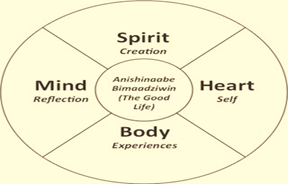
 A beige circle divided into four by intersecting lines, labeled 'Spirit', 'Mind', 'Body', and 'Heart'. At the circle's center: 'Anishinaabe Bimaadiziwin (The Good Life)' in black text.

(1) Adopting stress reduction practices, (2) advocacy through youth-adult partnerships, (3) teach the historical foundations of racism for people of color (4) promote racial justice initiatives for reform.  

Adopting stress reduction practices, such as mindfulness, in schools to use with youth, teachers, and other school personnel can reduce tension and mitigate conflict. The work of the Holistic Life Foundation shows that mindfulness reduces stress-related behaviors by using meditative practices to improve attention, reduce stress, and increase self-regulation among adults and children. If we identify ways to adopt stress reduction practices in school, we can potentially reduce racial tensions.

Advocacy through youth-adult partnerships centers on improving community and civic engagement among youth. These partnerships can link youth to social support and provide opportunities for them to address racism and participate in decision-making in school. These types of activities can improve school engagement and build several skills for youth, such as social competence and self-efficacy (Zeldin, Christens, & Powers, 2013). 

The Historical Foundations of Racism can be taught as a pathway to show transparency about systemic racism and oppression for people color.  Students should be able use their higher- level thinking skills about institutionalized racial disadvantages and systemic racial inequality. This will open the lines of communication to engage in dialogue about how America’s history has influenced our society and institutions today.

Racial Justice is the systematic fair treatment of people of all races, resulting in equitable opportunities and outcomes for all. Racial justice initiatives address structural and systemic changes to ensure equal access to opportunities, eliminate disparities, and advance racial equity—thus ensuring that all people, regardless of their race, can prosper and reach their full potential. Racial justice and equity are not achieved by the mere absence of racial discrimination or the perceived absence of harmful racial bias, but rather through deliberate action to dismantle problematic and build positively transformational systems – action must be carried through with the conviction, policies, laws, commitment and dedication of advocates.

Schools are a place for us to nurture the minds of future generations, and we must continue to help students learn to read and write and think. But we must not ignore the impact that this type of trauma can have on students’ long-term well-being and educational attainment. We must also help our children learn how to process the immense emotional and mental hardships they have experienced.

We want to hear from you! Send comments you want to share with us to Blog-WISE – Initiative for Stigma Elimination.

Our next WISE online Coalition Meeting entitled, “Addressing Stigma at the Intersection of Addiction and Mental Health” will be on Thursday, February 15, 2022, from 9:30am-11:30am.

Here are some references and resources you could use to further your understanding about the effects of racism and trauma on Black and Brown students’ mental health.

Further readings

Brown, T. M. (2007). Lost and turned out: Academic, social, and emotional experiences of students excluded from school. Urban Education, 42 (5), 432 –455.

Bryant-Davis, T., & Ocampo, C. (2005). Racist incident-based trauma. The Counseling Psychologist, 33 (4), 479-500.

Ferguson, R. F. (2003). Teachers’ perceptions and expectations and the Black-White test score gap. Urban Education, 38, 460–507.

Henderson, D. (2017). Race-Related Trauma in the Public Education System. Psychology Today.

National Child Traumatic Stress Network, Justice Consortium, Schools Committee, and Culture Consortium. (2017). Addressing Race and Trauma in the Classroom: A Resource for Educators. Los Angeles, CA, and Durham, NC: National Center for Child Traumatic Stress.

Substance Abuse and Mental Health Services Administration (SAMHSA) (2016). Understanding historical trauma when responding to an event in Indian country. Retrieved from http://store.samhsa.gov/shin/content/SMA14- 4866/SMA14-4866.pdf

Zeldin, S., Christens, B. D., & Powers, J. L. (2013). The psychology and practice of youth-adult partnership: Bridging generations for youth development and community change. American Journal of Community Psychology, 51, 385–397. doi: 10.1007/s10464-012-9558-y

Video Links

Understanding Racial Trauma
Systemic Racism Explained

Dr. Ricardo Anderson
Picture of Dr. Ricardo Anderson

Dr. Ricardo Anderson

Dr. Ricardo Anderson is a Certified Recovery Support Specialist (CRSS), a co-facilitator of a recovery group for all types of addictions, serves on the Executive Board for WISE as well as the Leadership Board for Peer Professionals. He is an advocate to help eliminate the stigma of mental health among individuals, the community and people of color.

Examples of What We Offer

Here are some specific examples of what partnership with us can look like. Every plan is customized — this is just a starting point.

PD Workshop Examples

Classroom wellbeing audit 

Classroom teachers assess their current wellbeing supports, identify specific strengths and gaps, and actively engage with research-based strategies to create an action plan for supporting student wellbeing in the classroom. This audit is more than a checklist—it’s a mirror that reflects how your everyday choices shape the mental health and wellbeing of everyone in your classroom. By pausing to rate, reflect, and plan, you will:

  1. Surface hidden stress points and strengths in your routines, environment, and relationships
  2. Connect concrete teaching practices (pacing, feedback, space design) to student and educator wellbeing
  3. Build shared language and data‐driven insights to guide micro‐interventions and systemic change
  4. Empower yourself and colleagues to co‐design evidence-based strategies that boost resilience, engagement, and trust
  5. Establish a continuous improvement cycle: audit → act → measure → refine

Specialized mental health skill-building workshops 

This goes beyond basic literacy to provide staff with practical skills and techniques for managing specific situations and promoting positive mental health within the school. 

Examples

  1. “De-escalation Strategies for School Staff.” A hands-on workshop teaching verbal and non-verbal techniques for safely de-escalating agitated or distressed students. 
  2. “Building Resilience and Coping Skills in the Classroom.” A training focused on equipping teachers with activities and strategies they can directly implement with students to foster resilience, teach coping mechanisms for stress, and promote emotional regulation. 
  3. “Creating Trauma-Informed Classrooms.” A workshop series exploring the impact of trauma on learning and behavior, and providing practical strategies for creating a safe, predictable, and supportive classroom environment that promotes healing and learning.
  4. “Mental Health & Wellbeing First Operational Mindset for Administrators”: When school leaders shift from a purely operational mindset to a mental‑health‑first mindset, the entire culture changes—students feel safer, staff feel supported, and families feel more connected. This workshop provides high‑impact, administrator‑friendly strategies. They’re concrete, actionable, and designed to fit into the real world of school leadership.

Adult SEL development 

Just as students benefit from developing social-emotional skills, so do adults. Adult SEL focuses on educators understanding their own emotions, managing impulses, setting goals, showing empathy, building healthy relationships, and making responsible decisions. 

Examples

  1. Interactive Workshops: Conduct workshops exploring each of the core SEL competencies (self-awareness, self-management, social awareness, relationship skills, responsible decision-making) through activities, group discussions, and reflection exercises.  
  2. SEL Integration Training: Train staff on how to weave SEL into their daily interactions, curriculum, and classroom management strategies. This includes explicit instruction on SEL concepts for students, creating opportunities for students to practice SEL skills, and integrating SEL into academic content.
  3. Emotion Regulation Strategies: Provide specific training on recognizing and managing challenging emotions in the workplace, including strategies for de-escalation and maintaining composure during stressful situations.

Integration of mental health into curriculum 

Embedding mental health education within the regular curriculum normalizes these topics, reduces stigma, and equips all students with foundational knowledge and skills related to their emotional well-being. Rogers’ understanding of key mental health concepts can inform curriculum development.

Examples

  1. Developing SEL Lessons with Mental Health Components: Collaborate with teachers to integrate lessons on topics like emotional regulation, empathy, and conflict resolution into existing Social-Emotional Learning (SEL) curricula, drawing on Rogers’ therapeutic approaches.
  2. Incorporating Mental Health Themes into English Language Arts: Suggest age-appropriate literature that explores themes of mental health, resilience, and seeking help, and provide teachers with discussion guides developed with input from mental health professionals.
  3. Creating Interactive Activities for Health Class: Develop engaging activities and projects for health classes that teach students about common mental health conditions, coping strategies, and how to access support.

PD Training Examples

Mental health literacy training 

This partnership focuses on equipping school staff with a foundational understanding of mental health concepts, common disorders in children and adolescents, and the importance of early identification and intervention.

Examples

  1. Elementary School Workshop: “Understanding Childhood Anxiety.” Topics could include:
    1. Different types of anxiety in elementary-aged children (separation anxiety, social anxiety, generalized anxiety).
    2. Observable signs and symptoms in the classroom (e.g., avoidance behaviors, physical complaints, difficulty concentrating).
    3. Strategies teachers can use to create a more supportive and less anxiety-provoking classroom environment (e.g., predictable routines, clear expectations, calming techniques).
  2. High School Professional Development Day: “Recognizing and Responding to Teen Depression and Suicidal Ideation.” Topics could include:
    1. Distinguishing between typical adolescent moodiness and signs of depression.
    2. Understanding risk factors and warning signs for suicide.
    3. Evidence-based strategies for talking to students who may be struggling.
    4. School protocols for reporting concerns and accessing support services.
  3. Customized Training for Special Education Staff: “Mental Health Considerations for Students with Learning Differences.” A tailored workshop addressing the unique mental health challenges that students with IEPs may face and strategies for integrating mental health support into their educational plans.

Trauma-Informed practices 

Trauma-informed practice recognizes the widespread impact of trauma and understands potential paths for recovery. In a school setting, this means understanding that students (and staff) may have experienced trauma and that these experiences can affect behavior, relationships, and learning. Training helps staff recognize the signs of trauma, respond in a way that avoids re-traumatization, and create a safe and supportive environment. It also includes understanding secondary trauma or compassion fatigue that educators may experience when working with individuals who have experienced trauma.

Examples

  1. Introductory Workshop: A foundational training on the prevalence and impact of trauma, the principles of trauma-informed care (safety, trustworthiness, peer support, collaboration, empowerment, cultural humility), and recognizing signs of trauma in students and colleagues.
  2. Skill-Building Sessions: Workshops focused on specific trauma-informed strategies, such as creating predictable routines, using de-escalation techniques, fostering a sense of safety and control, and promoting student voice and choice.
  3. Addressing Secondary Trauma: Training specifically addressing the impact of working with traumatized individuals on the helper, providing strategies for self-care and seeking support to prevent compassion fatigue and burnout.

Educator Resilience-Building Workshop Examples

Mindfulness and stress reduction workshops for staff 

Mindfulness involves paying attention to the present moment without judgment. Stress reduction techniques are practical strategies designed to lower physiological and psychological responses to stress. Training in these areas equips educators with tools to manage the inherent demands and pressures of their job, cultivate a sense of calm, and increase their capacity to be present and responsive.

Examples

  1. Workshop Series: A series of workshops (30-60 minutes each) delivered after school or during professional development time. 
  2. Short, Practical Sessions: Offer 15-minute guided mindfulness or breathing exercises before staff meetings or during designated breaks.
  3. Online Modules: Provide access to self-paced online modules on stress management and mindfulness techniques.

Building resilience (CLE)

Resilience is the ability to adapt well in the face of adversity, trauma, tragedy, threats, or significant sources of stress. Training in resilience helps educators identify their strengths, develop positive coping mechanisms, cultivate optimism, and build strong support networks. 

Examples

  1. Interactive Workshops: Sessions exploring the key components of resilience (e.g., self-awareness, self-regulation, optimism, connection, purpose). Activities could include identifying personal strengths, developing positive self-talk strategies, and practicing problem-solving skills.
  2. Goal Setting and Action Planning: Training on setting realistic goals and developing action plans to navigate challenges and achieve a sense of accomplishment.
  3. Building Support Networks: Facilitating discussions and activities that encourage staff to build strong relationships with colleagues and identify external sources of support.

Enhancing school climate – for the staff

School climate refers to the quality and character of school life. A positive school climate for staff is characterized by trust, respect, collegiality, collaboration, and a sense of belonging. Consultation focuses on identifying areas for improvement and implementing strategies to foster a more supportive and positive environment.

Examples

  1. Team-Building Activities: Recommending and facilitating team-building activities that promote positive relationships and a sense of community among staff.
  2. Recognition and Appreciation Programs: Consulting on developing formal or informal programs to recognize and appreciate staff contributions and efforts.
  3. Creating Opportunities for Social Connection: Advising on creating spaces and opportunities for informal social interaction among staff.

Systemic Examples

Needs assessment and strategic planning (CLE)

A systematic process of gathering information about the current state of staff wellbeing within the school, identifying key stressors, and understanding the needs and preferences of the staff. This data then informs the development of a targeted and effective plan for implementing wellbeing initiatives.

Examples

  1. Administering Surveys: Using anonymous surveys to gather data on staff stress levels, workload perceptions, access to resources, and interest in different types of wellbeing support.
  2. Conducting Focus Groups: Facilitating small group discussions with staff from different roles (teachers, administrators, support staff) to gain deeper qualitative insights into their experiences and needs.
  3. Reviewing Existing Data: Analyzing existing school data such as attendance records (staff absences), staff turnover rates, and incident reports (if relevant to stress/conflict).
  4. Collaborative Goal Setting: Working with the school leadership team and wellbeing committee to set specific, measurable, achievable, relevant, and time-bound (SMART) goals for improving staff wellbeing.

Developing supportive policies and practices 

Examining existing school policies, procedures, and unwritten norms to identify those that may contribute to staff stress or hinder wellbeing. Consulting on modifications or new policies that actively promote a healthy work environment.

Examples

  1. Communication Protocols: Advising on establishing clear and efficient communication protocols to reduce ambiguity and information overload.
  2. Meeting Structures: Consulting on making meetings more efficient and purposeful, perhaps by designating some meetings specifically for collaboration or wellbeing check-ins rather than just information dissemination.
  3. Establishing Boundaries: Providing guidance on establishing and respecting professional boundaries regarding work emails and communication outside of school hours.

Consultation on school mental health systems 

This involves leveraging Rogers’ understanding of best practices in mental health care to advise schools on the development and implementation of comprehensive systems that support student and staff well-being.

Examples

  1. Developing a School-Wide Mental Health Protocol: Consulting with a school district to create a clear and consistent protocol for identifying students in need of mental health support, conducting initial assessments, making referrals, and collaborating with external providers (including Rogers, if appropriate).
  2. Implementing a Multi-Tiered System of Supports (MTSS) for Mental Health: Advising a school on integrating mental health supports within their existing MTSS framework, ensuring that all students receive appropriate levels of support based on their needs.
  3. Conducting a Mental Health Needs Assessment: Partnering with a school to administer surveys and conduct focus groups with students, staff, and parents to identify key mental health needs and inform the development of targeted interventions and supports.

Integrating wellbeing into existing structures 

Embedding wellbeing initiatives within the school’s existing operational framework rather than treating them as separate, add-on programs. This ensures long-term sustainability and demonstrates that wellbeing is a priority.

Examples

  1. Professional Development Alignment: Integrating wellbeing topics into regular professional development days or staff training sessions.
  2. Staff Meeting Agendas: Including a dedicated agenda item for staff wellbeing check-ins or sharing wellbeing tips during weekly staff meetings.
  3. School Improvement Plans: Incorporating goals related to staff wellbeing into the school’s overall improvement plan.


Coaching Examples

Leadership coaching

Coaching specifically designed for school administrators and team leaders. This focuses on developing their leadership skills related to supporting staff wellbeing, creating a positive team culture, and effectively managing workplace dynamics that can impact stress levels.

Examples

  1. Promoting Work-Life Balance: Coaching leaders on modeling healthy work-life boundaries and encouraging their staff to do the same.
  2. Building Team Cohesion: Working with leaders on strategies to foster a sense of teamwork, trust, and psychological safety within their teams.
  3. Mentor Coaching for New School Administrators on Fostering a Positive School Climate: Pairing experienced administrators with new leaders and providing coaching focused on creating a supportive and mentally healthy environment for both students and staff.

Individual wellbeing coaching

A confidential and supportive partnership between a trained coach and an individual staff member. The coach helps the staff member identify their wellbeing goals, explore challenges, develop strategies, and build self-awareness and resilience. This is particularly helpful for staff experiencing high levels of stress, burnout, or those seeking to proactively enhance their wellbeing.

Examples

  1. Goal Setting Sessions: Initial coaching sessions focused on helping the staff member clarify their wellbeing goals (e.g., reducing stress, improving work-life balance, developing better coping skills).
  2. Strategy Development: Working with the staff member to identify and practice specific strategies for managing stressors and improving wellbeing (e.g., time management techniques, communication skills, boundary setting).
  3. Reflection and Problem-Solving: Providing a space for the staff member to reflect on their experiences, process challenges, and problem-solve difficult situations.

Instructional coaching with a wellbeing lens 

Integrating conversations and support around wellbeing into existing instructional coaching cycles. This recognizes that teacher wellbeing is intertwined with their classroom practice and provides a holistic approach to support.

Examples

  1. Managing Classroom Stressors: Coaches can work with teachers to develop strategies for managing challenging student behaviors, reducing classroom disruptions, and creating a more calm and predictable learning environment.
  2. Building Positive Student Relationships: Coaching on techniques for building strong, positive relationships with students, which can be a source of both joy and stress for teachers.
  3. Workload Management within Instruction: Helping teachers prioritize tasks related to planning, grading, and differentiation in a way that feels manageable.
  4. Reflecting on Emotional Responses: Coaching teachers to reflect on their emotional responses to classroom situations and develop strategies for managing those emotions constructively.

Peer coaching programs 

Training selected staff members to serve as peer coaches for their colleagues. This leverages internal expertise and fosters a culture of mutual support within the school. Peer coaches can provide a confidential and relatable source of support, sharing strategies and offering encouragement.

Examples

  1. Coach Training: Training peer coaches in basic coaching skills, active listening, confidentiality, and boundary setting.
  2. Structured Check-ins: Establishing a structure for peer coaching interactions, such as regular informal check-ins or more formal scheduled conversations.
  3. Providing Resources: Peer coaches can share relevant wellbeing resources with their colleagues.